frxUSD ReserveLink is Live on Aave
frxUSD ReserveLink is live on Aave, routing yield from frxUSD reserves back to lenders. How it works, and why it raises supply APR at low utilization.
frxUSD ReserveLink is live on Aave, making Aave the first major lending market to integrate directly with the Frax stablecoin operating system. ReserveLink routes the yield generated by frxUSD reserves back into DeFi markets, so that value reaches the lenders and applications creating demand for the stablecoin instead of stopping at the issuer.
DeFi is always in pursuit of greater capital efficiency. Until now, stablecoin reserve value has largely been captured at the issuer layer, separate from the applications and users that create demand for those stablecoins. ReserveLink shows how stablecoins can become more aligned with the protocols they power and the users they serve.
Lending markets need liquidity available for withdrawals and future borrowing demand. That liquidity is essential to the user experience, but when stablecoins sit unborrowed, they often generate little or no return for lenders. This can cause stablecoin supply yields to fall below the risk-free rate of return.
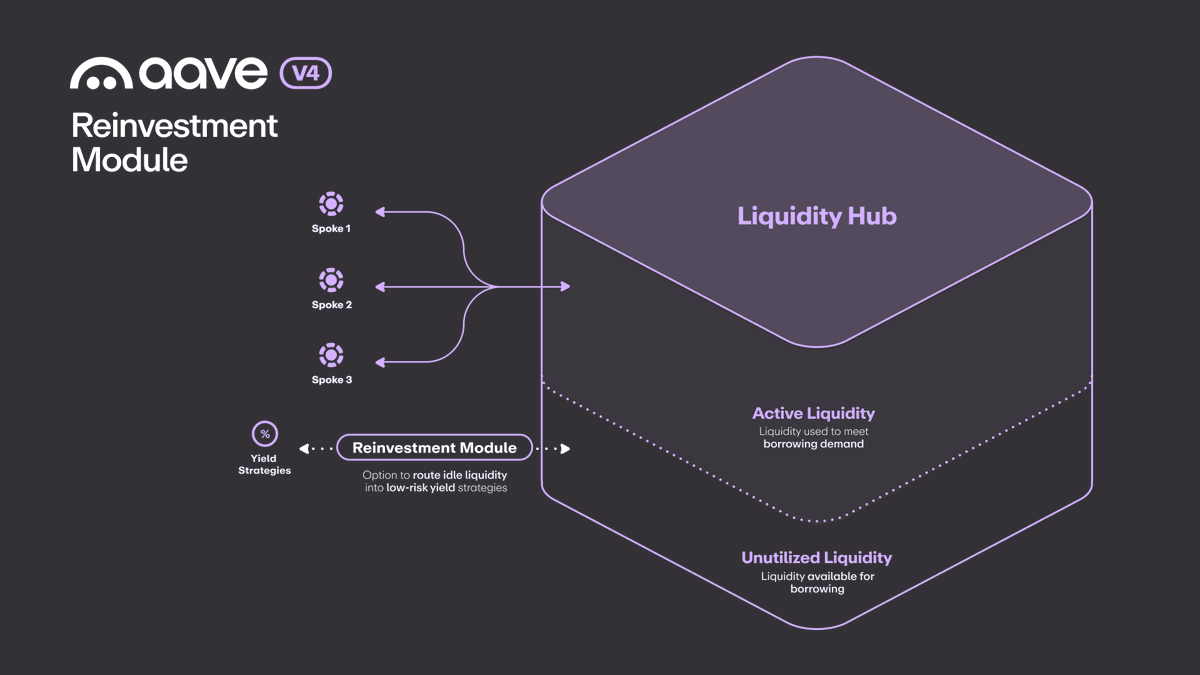
Over the past year, both Frax and Aave have explored how to make capital more productive without compromising liquidity or increasing risk. Aave's Reinvestment Module is built around a straightforward observation: a portion of liquidity deposited into lending markets will always remain idle, and there should be mechanisms to put that liquidity to work while preserving the safety and functionality users expect.
Frax arrived at a similar conclusion from the perspective of stablecoin design. Reserve-backed stablecoins hold productive assets such as tokenized Treasuries. Those assets generate yield, but historically that value has remained at the issuer layer, separate from the applications and users that create demand for the stablecoin.
ReserveLink changes that by routing reserve-generated value back into DeFi markets. On Aave, this infrastructure can make frxUSD more useful to lenders, more aligned with protocol growth, and more productive for the broader DeFi ecosystem.
What is frxUSD ReserveLink?
ReserveLink is infrastructure that allows Frax to route a portion of the yield generated by frxUSD reserves back to the applications where frxUSD is being used.
frxUSD is a fully collateralized stablecoin backed by tokenized Treasury assets, and its reserve composition is published onchain. These reserves generate yield regardless of whether every unit of frxUSD is actively being borrowed, traded, or utilized elsewhere in DeFi.
Historically, that yield would accrue to the stablecoin issuer. With ReserveLink, Frax can instead direct a portion of that yield toward ecosystem partners. Holders who want reserve yield directly can hold sfrxUSD, the yield-bearing form of frxUSD. ReserveLink addresses the separate case: frxUSD sitting inside an application, backing activity for someone else.
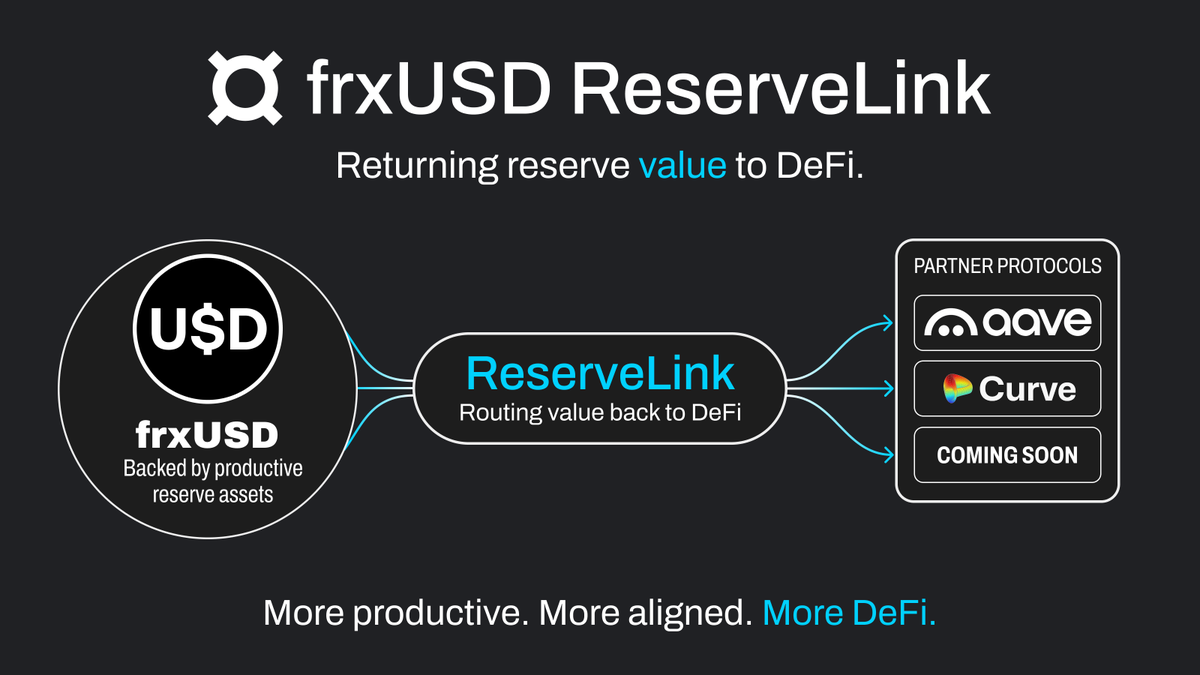
For Aave users, this means that yield generated by reserves backing unborrowed frxUSD can be distributed back into the market as incentives. The economic activity occurring within the reserves is no longer isolated from the applications that create utility for the stablecoin. The yield already exists. What changes is how that yield is distributed.
How ReserveLink improves lending yield
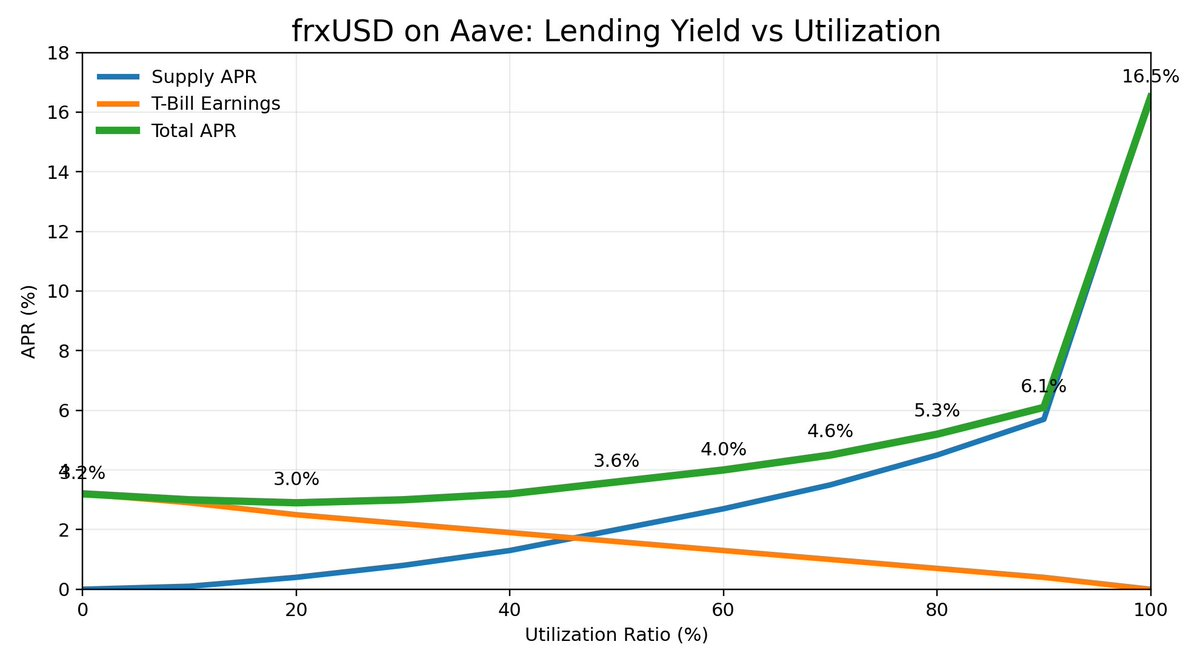
ReserveLink improves capital efficiency by returning value generated by frxUSD reserves back to lenders. At lower utilization levels, this creates a yield floor that supplements borrowing demand, helping supplier returns remain productive even when a significant portion of liquidity is idle. As utilization rises, lenders continue benefiting from normal borrowing activity, resulting in higher overall returns across market conditions.
In the example above, total APR stays above 3% even when almost no frxUSD is being borrowed, and climbs through 4.6% and 6.1% as utilization increases.
Why this matters for stablecoins and lending markets
The significance of frxUSD ReserveLink extends beyond a single integration.
Historically, stablecoins and lending markets have operated as separate layers of infrastructure. Lending markets create demand for stablecoins by providing borrowing and lending opportunities. Stablecoins provide the liquidity that makes those markets possible. Despite this interdependence, the economic relationship between the two has been limited.
Reserve yield has generally remained with the issuer, while lending markets have relied primarily on borrower demand and protocol incentives to attract liquidity.
frxUSD ReserveLink introduces a new model. Instead of treating reserve yield as an isolated revenue stream, it becomes a resource that can be shared across the ecosystem. Stablecoin issuers can directly support the applications that drive adoption. Lending markets can benefit from the economics of the assets flowing through them. Users can participate in value that would otherwise remain concentrated within a single protocol.
This creates a more aligned relationship between stablecoins and the applications built around them.
It has also become increasingly relevant as stablecoin regulation evolves. Current legislative discussions have focused on distinguishing passive yield paid on idle stablecoin balances from activity-based rewards tied to actual usage. ReserveLink is designed around participation. Yield is not paid simply for holding frxUSD, it is directed toward users actively supplying liquidity and contributing to the functioning of DeFi markets.
Frax is uniquely positioned to support this model because frxUSD has built the entire stablecoin operating system required to route that value back into the DeFi ecosystem. It also requires a positive-sum issuer like Frax who wants to share more value with DeFi users.
Why Aave?
Aave is the largest DeFi lending protocol, and when Aave wins, DeFi wins. Its scale makes it the best place to introduce infrastructure that can improve the user experience and capital efficiency for onchain lending markets without compromising on risk.
Aave V4 creates an opportunity to keep pushing that standard forward. The Reinvestment Module is designed to improve the productivity of idle liquidity within lending markets. ReserveLink is designed to improve the productivity of reserve value within stablecoin systems. While the mechanisms are different, both approaches seek to make capital work harder while preserving the safety users expect from Aave.
ReserveLink does not introduce additional leverage, new collateral assumptions, or speculative strategies. ReserveLink simply creates a more efficient pathway for value that is already being generated.
A new generation of stablecoins
frxUSD ReserveLink redefines how a stablecoin can be aligned with DeFi.
Stablecoins have historically competed on liquidity, distribution, and trust. Those remain essential, but ReserveLink introduces a new dimension: the ability to share reserve-generated value with the applications and users that help drive adoption.
The launch of frxUSD ReserveLink on Aave is an early example of this new model. It demonstrates how stablecoins and lending markets can become more tightly integrated, allowing value generated at the reserve layer to flow back into the markets where stablecoins are used. The launch was also covered by Stablecoin Insider, which reported frxUSD going live as a default stablecoin across Aave V4's Core Hub spokes.
This is the direction Frax has been building toward: stablecoin infrastructure that is fully backed, deeply integrated, and economically aligned with DeFi. ReserveLink turns frxUSD from a passive unit of liquidity into an active contributor to the ecosystems it powers. That is what the next generation of stablecoins should look like.